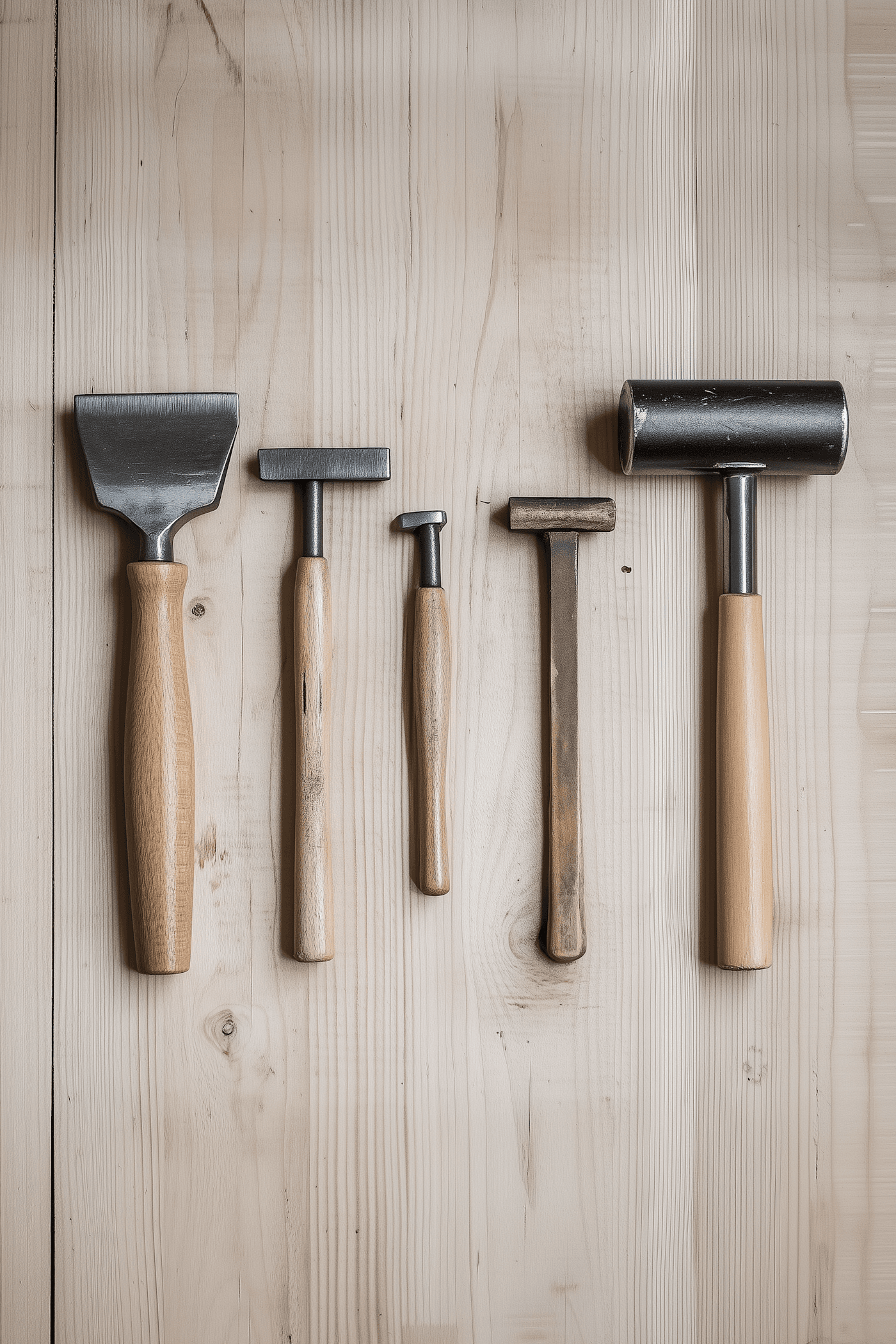
The tool wall in my first workshop had forty-one things on it. I counted, because at the time I was proud of it. In the shop I work in now there are three things I would replace immediately if they disappeared tonight, and everything else could wait until the shops opened on Monday.
The knife
A marking knife, not a chisel and not a pencil. A pencil line has width, and width is where the error lives. The knife leaves a line with no thickness at all, and more usefully it leaves a small wall for the chisel to fall into.
It cost less than a decent meal and it improved my joinery more than any of the expensive things above it on the wall. That ratio has never repeated.
The plane
One low-angle block plane, sharp. Not a set. I owned a set for years and used two of them, and the collection quietly made me worse, because whenever a cut went wrong my first thought was that I had chosen the wrong plane rather than that I had not sharpened the right one.
A tool you maintain teaches you. A tool you merely own only reassures you.
The lamp
The third is not a tool. It is a lamp on an arm that can be dragged to within a foot of the work and pointed across the surface rather than down at it.
Light raked across a board shows you every ripple the plane left, every patch of missed sanding, every glue line that is not quite closed. Overhead light hides all of it, cheerfully, until the piece is in someone's house on a bright afternoon and the flaws arrive uninvited.
More problems in my work were caused by not seeing than by not being able. The lamp fixed a category of error that no amount of skill was going to reach.
The rule that came out of it
Buy the thing that shows you what you are doing before the thing that does it. Then use it long enough to be annoyed by it, and let the annoyance choose the next purchase.
Written by

Elena Marsh
Founding editor
Elena spent eleven years making furniture before she started writing about the work instead of doing it. She still keeps a bench in the back room, mostly for thinking.